
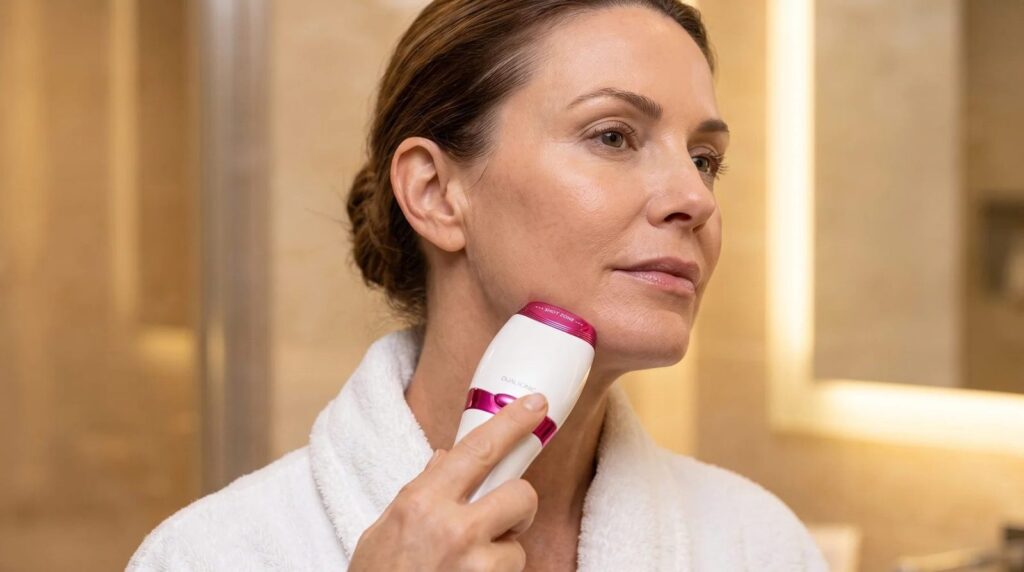
You have the device, or you are about to. What nobody hands you with it is the method: how much gel, which mode for which zone, how a shot should feel, and how often is too often. This is the complete guide to using the Dualsonic Optimum for at-home HIFU, written from the user manual and from the questions owners actually ask us.
In short
- Once a week is the rhythm. More sessions do not make more collagen.
- Use plain conductive ultrasound gel, a generous layer, one zone at a time. Too little gel is the main reason a shot stings.
- Choose the mode named after the zone. V-up reaches 4.5 mm at the jaw; Eye-up stays at 1.5 mm on the bone beneath the eye.
- Place, shoot, lift. Never glide the head while a shot is firing.
- Start every new zone at level one. Most people settle at level two.
- Results build over 8 to 12 weeks, which is why a structured plan such as the 12-Week Ritual makes the difference.
How at-home HIFU works, in two minutes
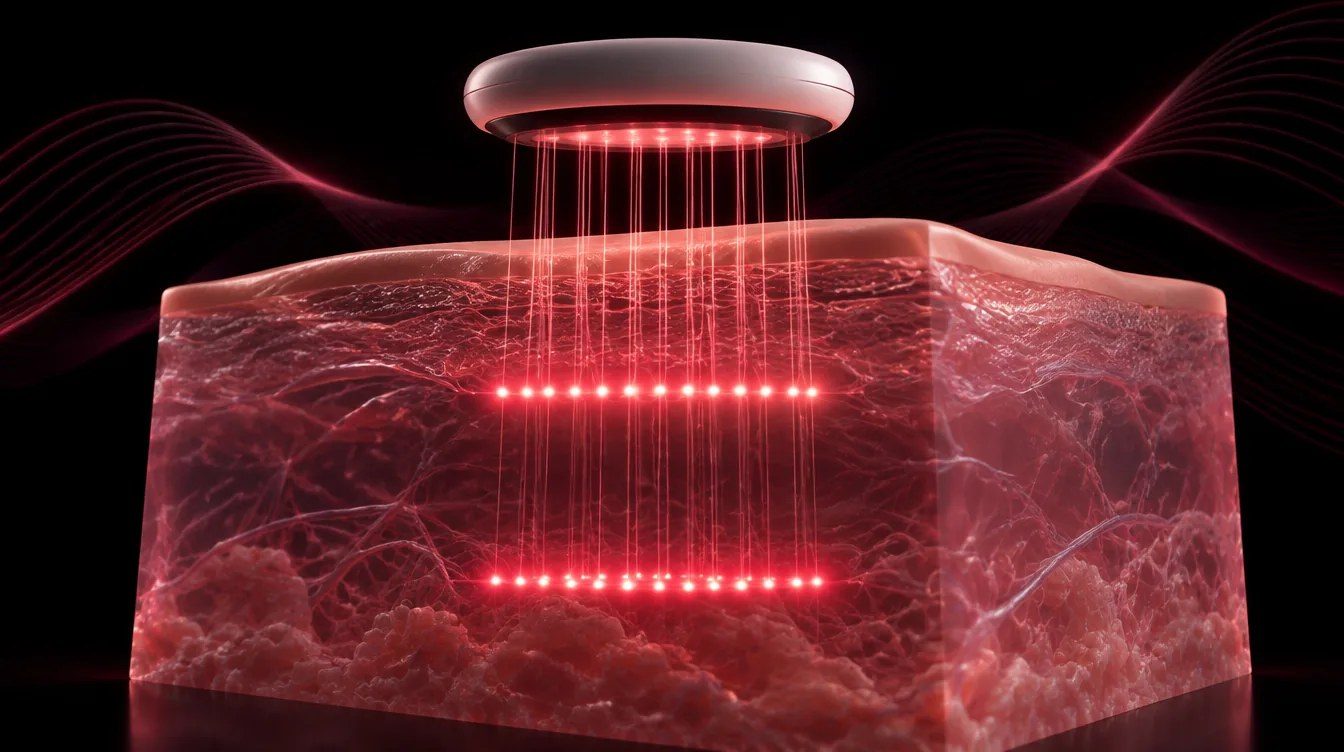
HIFU means high-intensity focused ultrasound. The treatment head focuses ultrasound energy into tiny points at a fixed depth under the skin. The surface stays intact; underneath, each point warms the tissue just enough to start the skin’s own repair response. Over the following weeks new collagen is laid down and then remodelled into something firmer and shorter than before. That contraction is the lift.
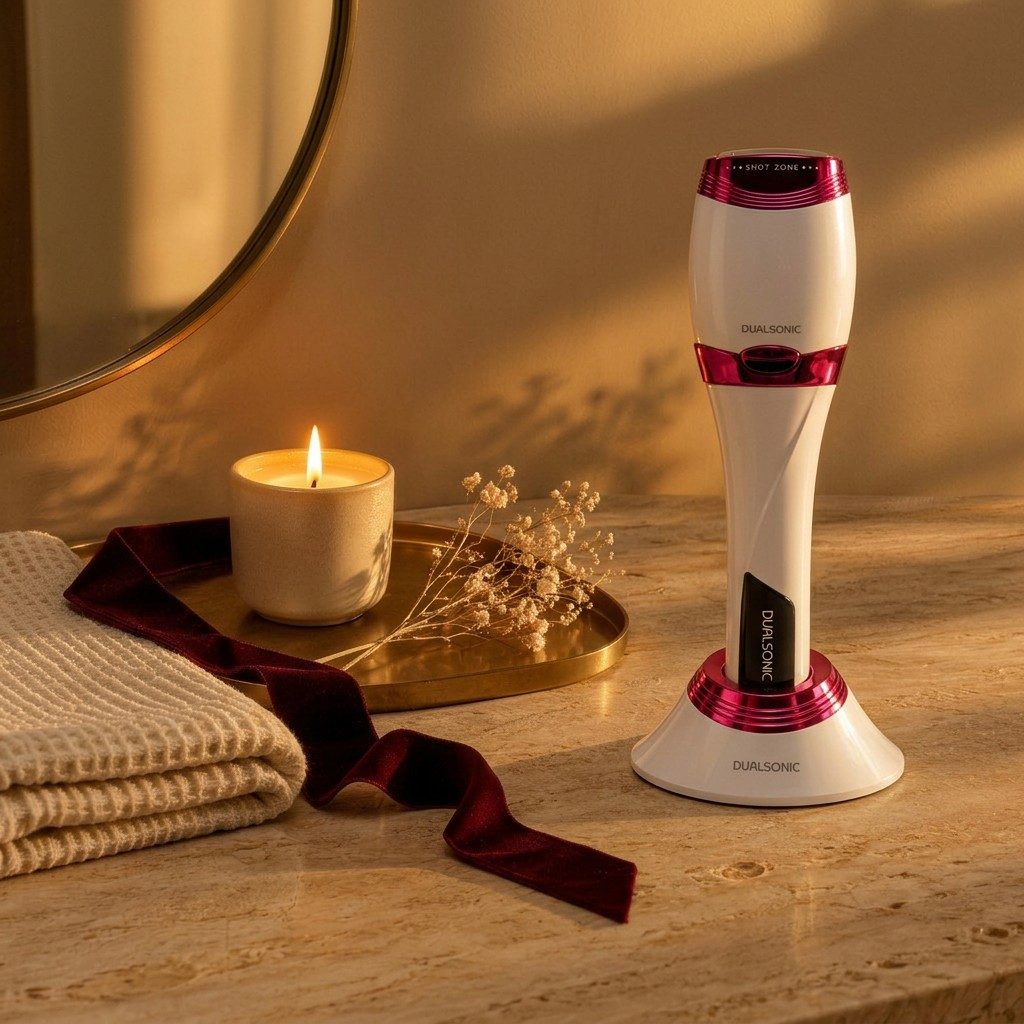
The Optimum is a specialist. It does focused ultrasound and light, nothing else. Its head fires 13 angled transducers together, laying down a line of energy rather than a single dot, and its six modes are really six depths, from 1.5 mm at the eye to 4.5 mm along the jaw. Choosing a mode is choosing where the energy lands.
Which depth does what
| Depth | Layer | What it is for |
|---|---|---|
| 1.5 to 2.0 mm | Dermis | Crow’s feet, forehead lines, the brow, the neck |
| 2.5 to 3.0 mm | Deep dermis | Cheeks, smile lines, overall firmness |
| 3.5 to 4.5 mm | SMAS | Jawline and chin, the layer a surgeon lifts in a facelift |
Treating a jaw at eye depth is pleasant and almost pointless. Treating an eye at jaw depth is neither safe nor sensible. You never have to guess: pick the mode named after the zone you care about and the depth is already right.
Before your first session
1. Buy gel, and buy plenty
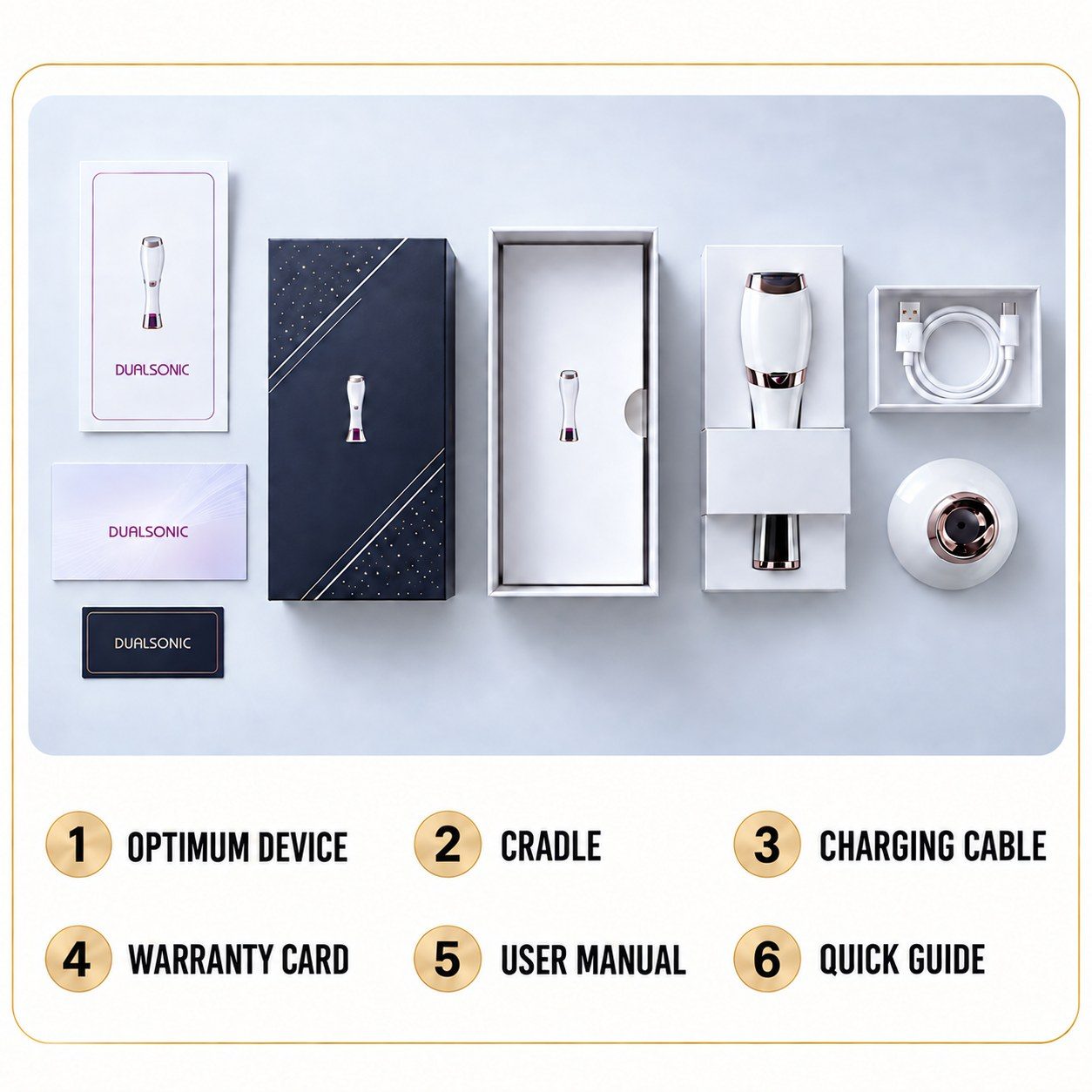
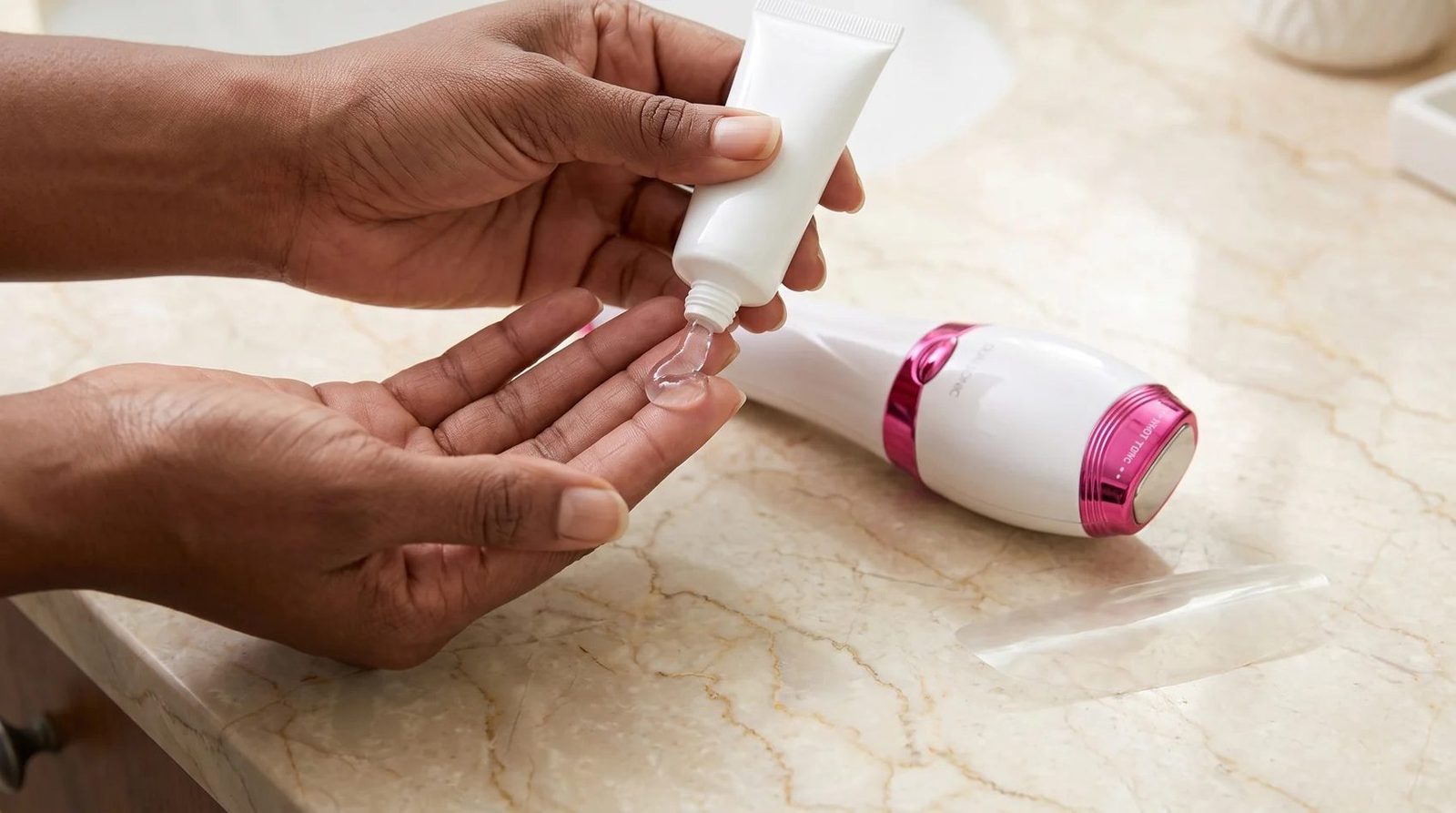
The box holds no gel. You need plain conductive ultrasound gel, the clear kind used for clinical scans, sold by pharmacies and medical suppliers. A 250 ml bottle covers a twelve-week course. Do not substitute aloe vera gel, hyaluronic serum, sheet-mask essence or oil: none of them couple ultrasound correctly, and an oily layer can concentrate heat unpredictably.
2. Charge it and get to know the controls
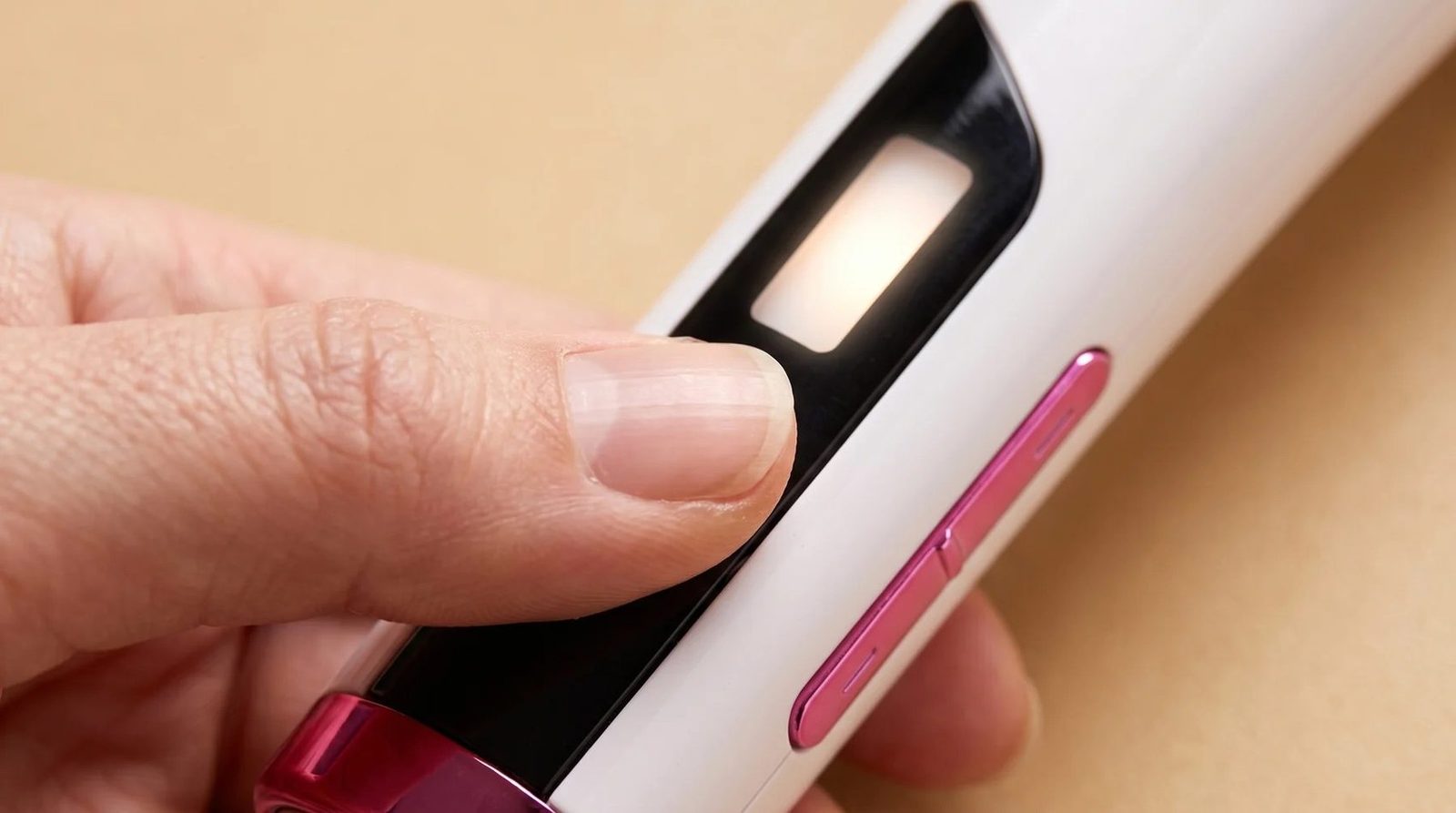
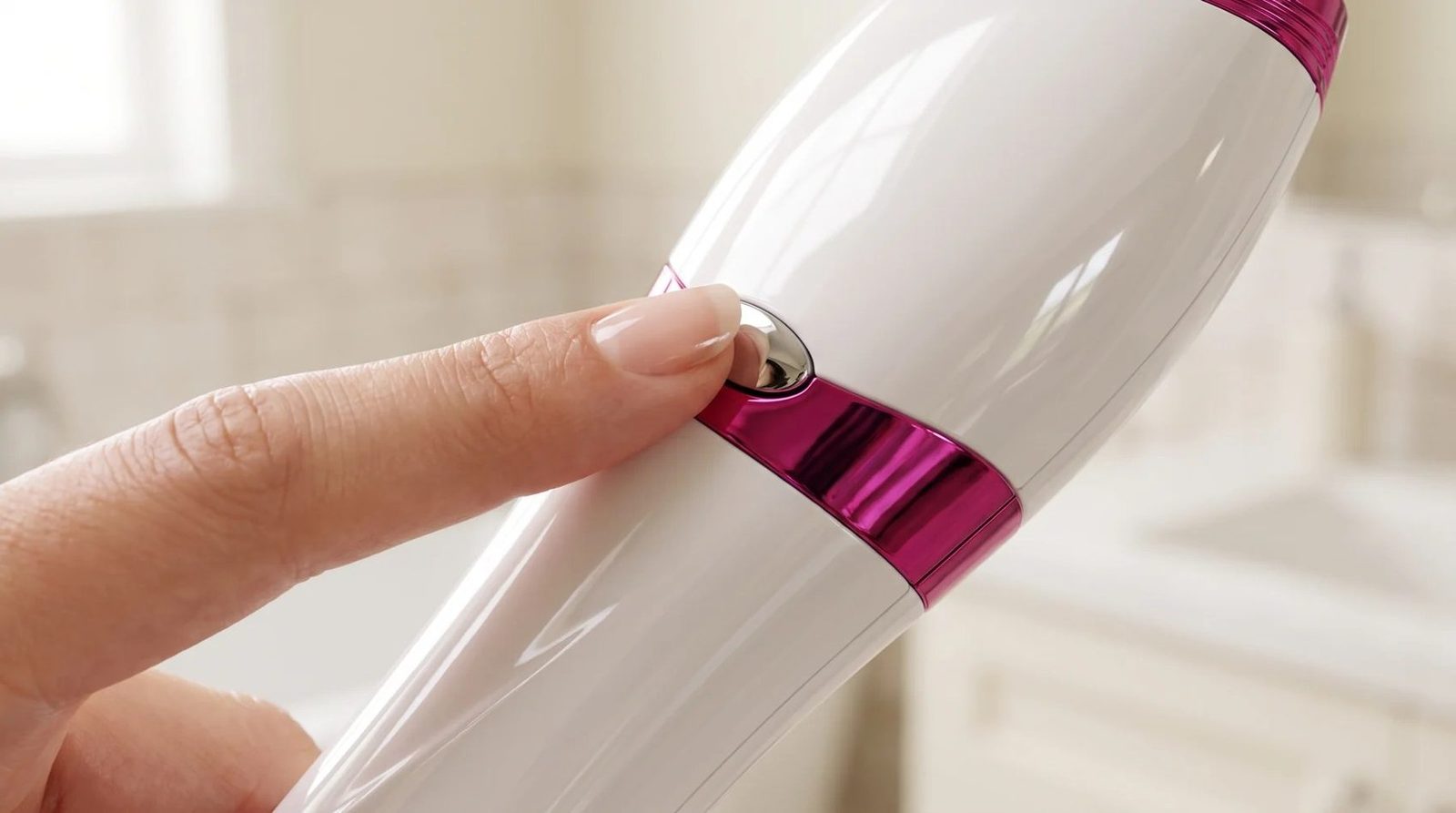
Rest the Optimum on its stand; the USB-C port sits at the rear base. Hold the power button for two to three seconds to switch on, then tap it to move between standby and ready. The intensity button doubles as the shot button: in standby, tap it to change intensity; in ready, press it to deliver shots. A full charge lasts well over an hour of use, so one charge covers several weeks of sessions.
3. Take a photograph
Before the first session, not after. Skin changes too slowly for memory to be a reliable witness. Use window light facing you, the same spot and the same time of day, and take three angles: front, left profile, right profile.
4. Read the contraindications
They are short, and two of them (implanted electronics, and recent filler or threads) are things people tend to discover they should have read afterwards. The full list is further down this page.
The six modes, and which zone each one treats
| Mode | Depth | Shots and time | Zone | Light |
|---|---|---|---|---|
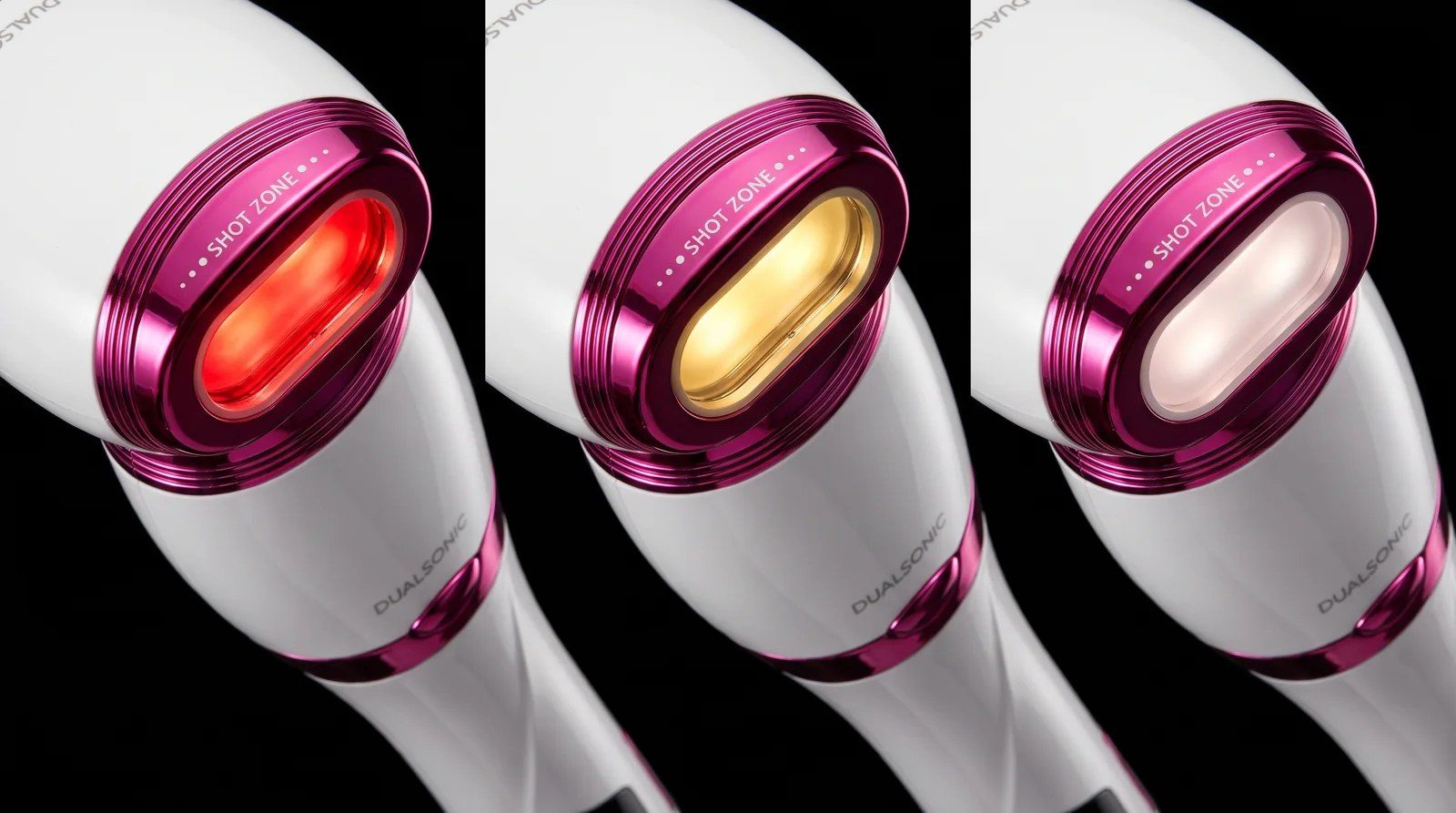
| Quick | Automatic sequence | 200 · about 6 min | Cheeks, eye area, forehead and brow | Red + infrared, then yellow |
| V-up | 3.5 + 4.5 mm | 50 · 1 min 40 | Jaw and under the chin | Red + yellow + infrared |
| Face-up | 2.5 + 3.0 mm | 100 · 3 min 20 | Cheeks and smile lines | Red + infrared |
| Eye-up | 1.5 mm | 50 · 1 min 40 | Bone beneath the eye, crow’s feet | Yellow |
| Brow-up | 1.5 + 2.0 mm | 50 · 1 min 40 | Forehead lines and brow | Yellow |
| Neck-up | 2.0 mm | 50 · 1 min 40 | Sides of the neck, collarbone to jaw | Yellow |
The light runs alongside the ultrasound automatically. If you have a photosensitive condition, hold the intensity button in standby to switch it off; the sun symbol on the display shows which. It changes nothing about the ultrasound.
How to use the Dualsonic Optimum, step by step
- Prepare. Cleanse, then dry the skin completely. Tie your hair back. Sit at a real mirror with light in front of you.
- Gel one zone. Apply the gel to the skin, not to the device head, in a layer about as thick as a face mask, thick enough to hide the skin’s texture. Do one zone at a time; a whole face gelled at once is dry at the jaw by the time you get there.
- Select the mode and level. Level one for every first session and every new zone.
- Place, shoot, lift. Put the whole head flat on the skin, press to deliver one shot, keep still until it finishes, then lift and move to the next placement. Never glide while a shot is firing.
- Work upward and outward. From the centre of the face towards the ear or hairline, giving both sides the same number of shots.
- Re-gel between modes. Every mode change is a good moment to top up.
- Finish. Rinse off the gel, then hydrating serum and moisturiser. SPF the next morning.
The five rules of good technique
- Place, shoot, lift. The head stays still for the whole shot.
- Flat contact. The whole treatment head against the skin, never an edge. On the curve of the jaw, reposition rather than tilt.
- One mark, one shot. Complete each placement once. Do not repeat a mark or add shots beyond the published total.
- Upward and outward. Away from the centre of the face.
- Mirror, seated, good light. You hold better angles and notice a missed zone.
One habit worth adding: count your shots as you go. It keeps both sides even and stops you repeating a placement.
Shot placement for the jaw and cheeks
V-up delivers 20 shots on each side of the jaw, working outward towards the ear, plus 10 under the chin. Face-up delivers 50 shots per cheek. Keep every placement on soft tissue: off the jawbone itself, the lips and the nasal bone.
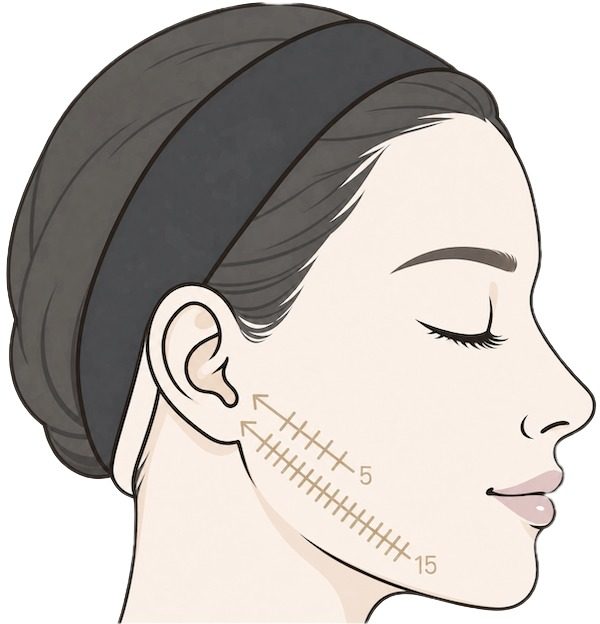
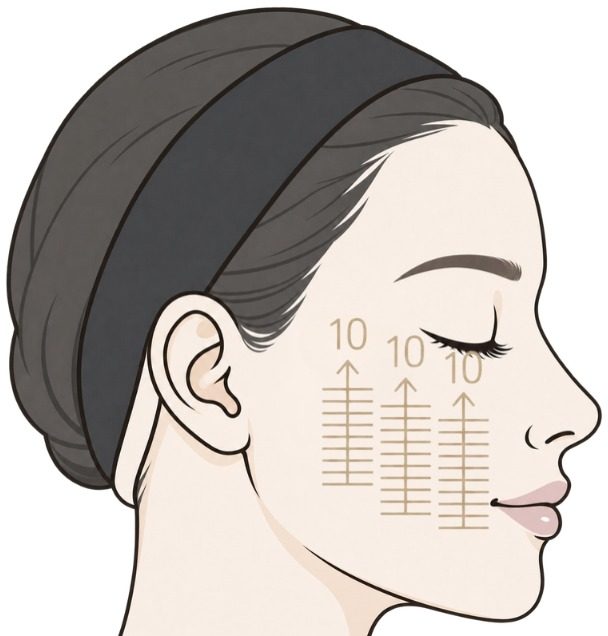
The Dualsonic Optimum 12-Week Ritual includes illustrated shot maps for every zone, jaw, cheeks, smile lines, eye area, brow and neck, with the exact count on every path.
Does at-home HIFU hurt?
It should feel like a brief warmth or a light prickle during each shot, fading as soon as the shot ends. The jaw, treated deepest, is where most people feel it most. The eye and brow modes are gentler.
If a shot feels sharp, the cause is almost always too little gel rather than too high a level. A thin layer leaves microscopic air gaps, and ultrasound crossing air concentrates at the surface instead of at depth. Stop, wipe, apply a much thicker layer and start that zone again. If a truly generous layer still stings, drop a level.
Sensitivity also moves from week to week with the season, sleep, stress, a glass of wine the night before, and very noticeably after any peel. Read the skin in front of you, not the number you used last time. Dropping a level for one week costs you nothing.
The three intensity levels
- Level one: every first session, every new zone, and any day the skin is irritated or recently exfoliated.
- Level two: the working level once you know how your skin answers. Most people stay here.
- Level three: only for the jaw and cheeks, only after a month of comfortable sessions at level two, and never around the eyes.
How often should you use it?
Once a week. The skin’s response runs on a healing cycle that takes weeks to complete, and treating into an unfinished cycle does not add to the result. An extra session does not produce more collagen; it produces heat where you did not want it. Pick a fixed evening (Sunday suits most people, since any redness has all night to settle) and protect it.
After an intensive twelve weeks, most people move to a maintenance rhythm of one session every three to four weeks. If you miss a week, take the session you missed and carry on. What does not work is doubling up to catch up.
Where you must never treat
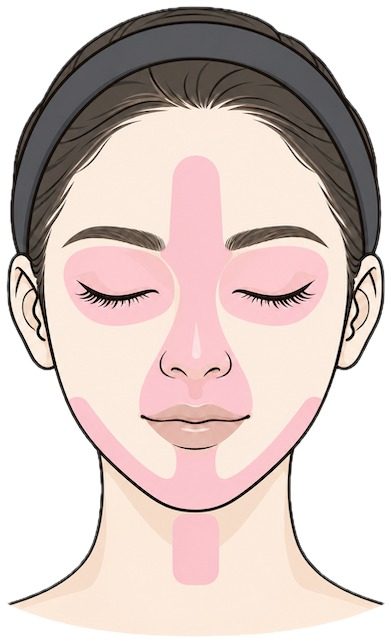
- Between the brows. The bone over the frontal sinus is thin and close to the surface.
- The eyes. Never over the eyeball or eyelid. Eye-up treats the orbital bone, the ridge you can feel, and stops there.
- Lips and mouth. Dense nerve supply and very little tissue over bone.
- The nasal bone. Bone directly under thin skin.
- The jawbone itself. Treat the soft tissue above and below the edge, not the ridge of bone.
- Adam’s apple and thyroid. Neck work stays on the sides; nothing crosses the centre of the throat.
Who should not use the Optimum
Pause and speak to your doctor first if you are pregnant or breastfeeding; have open wounds, raised or keloid scars or active severe acne in the area; have metal or silicone implants, threads or permanent filler in the treatment area; wear a pacemaker, defibrillator or other implanted electronic device; or are under active medical or dental treatment in the head and neck. After filler, fat grafting or a thread lift, wait for the recovery period your practitioner gave you, usually two to six months. The safety instructions supplied with your device always come first.
Aftercare: the next 72 hours
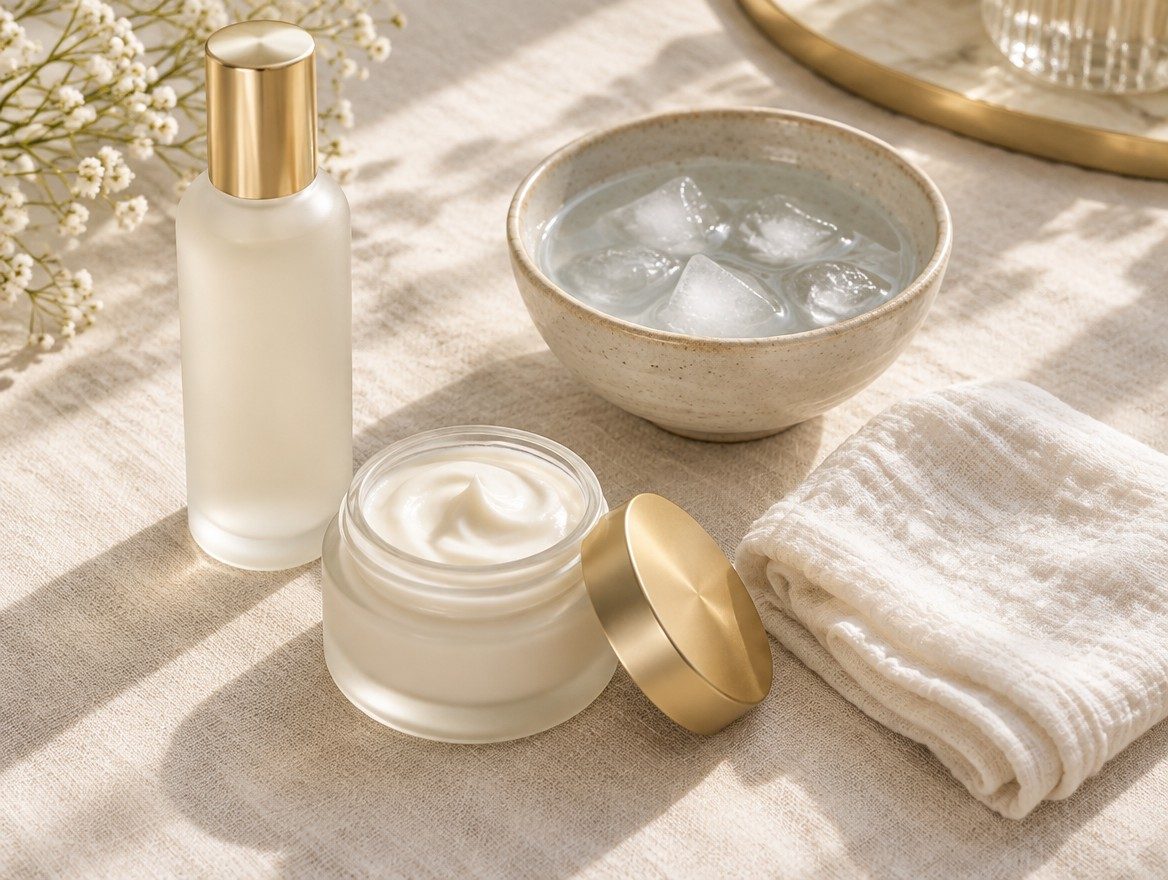
- Expected: mild redness and a warm, tight feeling for a few hours.
- No heat for one to three days: no sauna, steam room or very hot bath.
- No exfoliation for a week: no acids, scrubs or stronger retinoids.
- Don’t scratch, even if it itches. It settles.
- Carry on: washing your face and wearing makeup the same day are both fine.
- Daily SPF. You are building collagen, and ultraviolet light breaks it down.
Redness that lasts beyond a day, at any level, means stop and speak to a clinician before continuing.
What results to expect, and when
- First session: a warm, tight feeling for a few hours. Nothing visible yet.
- Weeks 2 to 3: skin feels firmer before it looks different. Makeup sits better.
- Weeks 4 to 5: the first photograph that surprises you, usually at the jaw.
- Weeks 6 to 12: peak remodelling. Contour changes start to show to other people.
- Six to eight weeks after the last session: remodelling is still going on, so the best photograph is often one you take later.
Be clear-eyed about what HIFU is. It tightens the tissue you already have; it does not remove skin. On mild to moderate laxity the difference shows in photographs. On significant excess skin it softens rather than transforms. For an evidence-based look at what home devices can and cannot do, read Do at-home HIFU devices actually work?
Why most owners stop, and how to keep going
Most people who buy a serious home ultrasound device use it enthusiastically for three weeks and then irregularly for three years. The device is not the problem. What is missing is structure: which zones to treat this week, at which level, in which order, and what to expect by when.
That is exactly what the Dualsonic Optimum 12-Week Ritual provides: twelve sessions, each specified down to the shot count, across three phases. It starts with four weeks of Quick Mode, moves to zone sequences, and finishes with the full sequence. It comes with shot maps for every zone, a photograph method and a session log. Read the week-by-week overview in The Dualsonic Optimum 12-Week Ritual: HIFU results week by week.

The Dualsonic Optimum 12-Week Ritual
46-page PDF · instant download · €29 / $35 / £26
English, Español, Français, Italiano
Frequently asked questions
How often should I use the Dualsonic Optimum?
Once a week. The skin’s collagen response takes weeks to complete, so extra sessions do not add to the result. After a twelve-week course, move to one session every three to four weeks for maintenance.
What gel should I use with the Dualsonic Optimum?
Plain conductive ultrasound gel, the clear kind used for clinical scans, from a pharmacy or medical supplier. Gel is not included in the box. A 250 ml bottle covers a twelve-week course. Do not use aloe vera gel, serums or oils instead.
Does at-home HIFU hurt?
It should feel like a brief warmth or light prickle during each shot that fades straight away. The jaw, treated deepest, feels strongest. A sharp sensation almost always means too little gel, so apply a much thicker layer before lowering the level.
Can I glide the Optimum across my skin?
No. Place the treatment head flat, deliver one shot, keep still until it finishes, then lift and move to the next placement. Never move the device while a shot is being delivered.
Which mode should I use for my jawline?
V-up. It delivers energy at 3.5 and 4.5 mm, the SMAS layer that supports the lower face: 20 shots on each side of the jaw and 10 under the chin, 50 in total. Keep off the jawbone itself and the centre of the throat.
Can I use the Optimum around my eyes?
Yes, with Eye-up at 1.5 mm, on the bony ridge beneath the eye and at the temple. Never treat the eyelid or eyeball, and never use level three around the eyes.
When will I see results?
Skin often feels firmer within two to three weeks. Visible change in photographs usually starts around weeks four to five, at the jaw first, and builds to week twelve. Remodelling continues for six to eight weeks after the last session. Results vary from person to person.
Can I use HIFU after Botox or fillers?
Not without asking the practitioner who treated you. Waiting times vary by product and are usually measured in months, typically two to six months after filler, fat grafting or threads.
Do I need to buy cartridges?
No. The Optimum has unlimited shots and no replaceable cartridges. It is covered for 1 year or 200,000 shots, whichever comes first.
Still choosing your device? Compare the two side by side in Dualsonic Optimum vs Maximum Alpha, or see what owning one costs against clinic sessions in HIFU lifting at home with the Dualsonic Optimum.
Dualsonic Optimum
Dual-layer HIFU at home · unlimited shots · Ruby or Ash
The Dualsonic Optimum is a cosmetic device for home use. It is not intended to diagnose, treat or cure any medical condition. Mode names, depths, shot counts and timings are as published in the Dualsonic Optimum user manual. Individual results vary. Always follow the safety instructions supplied with your device.